Wednesday, September 11, 2013

Conversations in Baobab

Today after class a few of us went on to the roof of our friend Amanda to have a few drinks after class. She lives about 20 minutes from Mermoz and about 30 minutes from the WARC in Baobab, named after the Baobab tree. Coincidentally there is a huge Baobab tree right around the corner from her house, which is even bigger than the one we saw on Goree Island. On our way over we stopped by the supermarket to get some chips and snacks. Her family is a Christian family which is why we are able to go to to her house to drink because the majority of the host families are Muslim; Senegal is 90-95% Muslim, and drinking is forbidden in those households. When we arrived we said hello to the members of her family who were sitting in the living room, they were all very warm and welcoming. I really like her older sister Clara because she is always the first to correct my french and she calls me Chris Brown every time she sees me, which I think is hilarious. Then we went up to the roof and within 10 minutes Amanda’s host brother, Prince walked up with cups for us. Prince is definitely one of the tallest Senegalese I have seen since my time here and he often plays basketball at the courts around the corner from his house. We welcomed him to sit down and have a drink with us. I really appreciated him coming up to talk with us because he’s our age, a college student and I feel like I can really have genuine conversations with him about the Senegalese and life here in Senegal, much like with Yousou.


Before Prince came up we were having an interesting conversation about the different racial categorizations that are on different forms of documentation in the U.S. and in Brazil, because Marcos is from Brazil. Eura then told me she was wondering about my mindset on the subject of my time here in Senegal, because I was the only African-American in the program, and I told her essentially the same thing that I told Brittany; I wanted a break from the stress as well as the pace of life at Columbia and there was an aspect of my identity that necessitated setting foot on the continent of Africa and experiencing the people and culture here. While my motivation for coming here was getting to know and learn about the Senegalese, I find it interesting how I spend 9am-6pm Monday-Friday in classes and at the WARC with American students. In the classroom we are learning about Senegalese society, culture and economy but at the same time I feel like there is a preservation of Americanism. We also are often together on the weekends except in those instances we’re exploring places around the city. I don’t find this element of my experience problematic because spending time with the other participants in the program is inevitable as I am here because of an American program so it makes sense that I am sharing my experiences with Americans. However, I sometimes feel as though I am in a bubble of American in Senegal. This is why I appreciate Prince and Yousou so much because they are willing to hang around just Americans in their home country and it is in those moments where I feel like I am getting an authentic experience in this country. Additionally when we are around them we speak French because English is their 3rd language, so it is an opportunity to practice our French while learning about the Senegalese culture. Although I have these sentiments about hanging out with students from the program, I do understand that the complete immersion, without any interaction with Americans, will come during the internship portion of the program when all of the students will be working in different parts of the country.


Someone then jokingly mentioned that I was the “token” of the program, a term with which I was all too familiar, although which Prince had never heard of it as he has spent his entire life around all Africans. He did explain to us that his experiences with diversity were in his classes at the University with people from the various West African countries, although in these situations the distinctions between people were more of a matter of cultural difference rather than a noticeable difference in skin color. I thought about how just our knowledge of this term "token" explained a great deal about the differences in our experiences. My life has been full of circumstances in which I was the “token”, however in no way am I ashamed of those experiences or do I consider myself a victim of them. I love my life and everything that has contributed to it as well as who I am, but in those experiences there I felt a certain element of visual isolation which I found impossible to ignore. Some may say that the visual isolation was self imposed and that if I did not want to care about the visual I did not have to, but for me the visual is always somewhat on my conscience. It did not govern my decisions and it didn't ever prevent me from pursuing anything, but it was always at the back of my mind. Unless I was in a Black Students Organization meeting, a cultural heritage celebration or an event that led to black people coming together in one space, I knew, even if I wanted to, I could never just blend in because I was darker than most people. Brittany who was present said that she had never thought about that aspect of being able to blend in or even the significance of it and I was glad that I was able to open her eyes to it. I pointed out that was a privilege that was not directly her fault or mine, but it is something I thought we should both be aware because it directly affects the way we experience life.


I asked Prince next about the perceptions that Senegalese people have of African-Americans. My reason for this question was that I wanted to know if there were preconceptions that Senegalese had of me as someone of African descent who grew up and was raised in an entirely different place with an dramatically different moral code. I wanted know what I was "working against" essentially, because I am used to understanding fully and being cognizant of stereotypes so that I can know what preconceived notions people I meet may have of me. His initial response to my question was, “They are good guys”, but he then explained that he couldn't provide me with anymore of an answer than that because he could never generalize a whole community of people or ascribe the characteristics of one person to many people. I appreciated his comment as I didn't expect it at all. I thought his response would surely reflect somewhat of an observance of the portrayal of African-Americans in the media or on television and an acceptance of that portray as somewhat valid, which is the case in America. I told him my reasoning for asking the question was the fact that our experiences were entirely different as I grew up in the country of the colonizer around the descendants of the colonizer, while Prince grew up in the place of origin of his descendants. Although there are many aspects of Prince's experiences which likely reflect the impact of the French colonization of Senegal and much of West Africa (such as the fact that we were communicating in French) there was no hyphen at the end of his racial identity.


I then asked him if he could tell that I wasn't Senegalese from sight if I wasn't surrounded by a whole bunch of Americans and a Brazilian and he said yes. He explained that I looked American in my dress and in my demeanor, but that I could also have possibly been a Senegalese person who had gone to America for school and returned to Senegal. His comment reminded of what Yousou said at the club in terms of how Senegalese women could tell I was American just by the way I was dancing because it was an aspect of myself that was inescapably American. My demeanor and the way I dance are two things which I do not consciously think about, yet they serve as markers of my Americanism. I then asked Prince about what Yousou told me in regards to Senegalese women not trusting African-American men because they think that they will have a baby with them and take the baby back to America. Prince explained that I will hear many things from people during my time here and I must take everything with a grain of salt, which I thought was helpful advice as well. Overall I found my conversation with Prince that night very helpful and enlightening. I realized that it was the hope for conversations such as these and moments of self-actualization which brought me here to Senegal.

Monday, September 9, 2013

Université Cheikh-Anta-Diop

Today was the first day of classes and I would say that they went relatively well. All of our classes are in French and I knew immediately that it would take me some time to begin to comprehend everything the professors were saying. I was not completely lost, but there were some things I knew that I was missing. I was not too stressed though because the good thing about this semester is that I will be getting Columbia credits, but my grades aren't going to transfer or effect my GPA so I finally have the chance to relax a little. I also like this because it has allowed me to focus more on my experience here as a whole rather focusing solely on doing well in all my classes. I'm still interested in learning and making the most out of all of my classes there's just not longer that pressure of trying to perfect everything that I do, which is so prevalent in my life at Columbia. I have had time to enjoy the city, spend time with my family and I feel my attitude towards doing all these things is a lot better because I don’t have the pressure of classes.


After class Jack, Eura and I went to the Universite de Chiekh-Anta-Drop because we hadn't been there yet and we heard that it was close to the WARC. This made sense because during lunch a lot of people come to eat and they all look like students or professors from the University. Jack and Eura also needed flash cards for our Wolof class and I needed a notebook as well as a planner for myself. We thought the school bookstore would be a good place to find things. The walk to the University was about 25 minutes as we walked along the main coastal road, la Route de la Corniche West. This road is very beautiful during the day because it's right along the ocean and there are a lot of amazing views as you walk along it ,although MSID warned us that there are a lot of robberies that happen on it at night so it is best to avoid the road after 6pm. When we arrived at the University the campus layout was unusually open especially in such a tightly packed city like Dakar. It also looked a little warned down as there were signs which one could barely read. The University itself is relatively new as it was established in 1957, but it is likely worn down because the city does not have money to carry out any renovations. As we looked for a library or a student center we passed their science building and political sciences building. We then asked for directions to the library from a few of the students who were on campus and they pointed us straight forward on the road we were on to the one building we saw that looked relatively new and modern.


When we walked up to it and tried to go inside we realized it was closed on Mondays after noon during the summer until the school year began in October. The school year for the Senegalese runs from October to July instead of September to May/June like in the US. To our right we saw a little shop that was selling supplies and that was where I purchased my notebook and planner. Eura got a notebook as well, but they didn't have the flashcards that they were looking for. We asked the man at the counter if he could direct us to another place that would have a bigger selection of supplies where Eura and Jack could find flashcards and he pointed us to the right, however he did not specify exactly where the shop was. We then went off to look around the campus for about 10 minutes but we were unable to find the shop so we just decided to just walk back to the WARC through the University campus this time instead of along the main road. I enjoyed walking through the greater University campus because we got a chance to check out their lecture halls, classroom as well as the dormitories, which were on the interior of the school. The dormitories were quite a sight because we saw clothes hanging outside of almost every window to dry. This made me think about how it is luxury to have had washing machines and dryers in all of the dormitories in which I have lived. I really couldn't imagine having to hand wash and hang dry all of my clothes as often as I do laundry. Additionally, I think a majority of the homes in Dakar don't have a washing machine or dryer because of the price of electricity. My household and most of the other households in which the other MSID students are staying have maids who wash all of the clothes and the dishes. Although I wash my undergarments myself because MSID emphasized that it was disrespectful to give the maids your underwear to clean.

After exiting onto a road behind the campus we saw a whole slew of karts set up right outside of the school selling school supplies and we realized that this was where the man had tried to point us initially. These karts had all the schools supplies one would need and as we walked down the road we saw that they had books and electronics as well, you just had to bargain for what you wanted. At first I was very surprised to see all of these karts were set up right outside of the school for all of the students. At Columbia and many other Universities the most convenient place to you get your supplies when you're on campus is from the overpriced bookstore. However, here in Dakar and you got your supplies from these karts and you could bargain to get the best deal. Jack and Eura were unable to find their flashcards, but it was pretty funny listening to them try to explain what a flashcard was to all of the vendors. Jack was able to get a book written by the past President on his views for the future of the country that he negotiated down to 1000CFA from 7000CFA and Eura bought a dictionary that she negotiated down to 3000CFA from 7000CFA also. We then continued to walk in the direction of the WARC as we wanted to make our way there without using the main coastal route and next thing we know we had arrived. The walk was about 15 minutes this time around because we cut straight through the campus.

Sunday, September 8, 2013

Day at the Beach

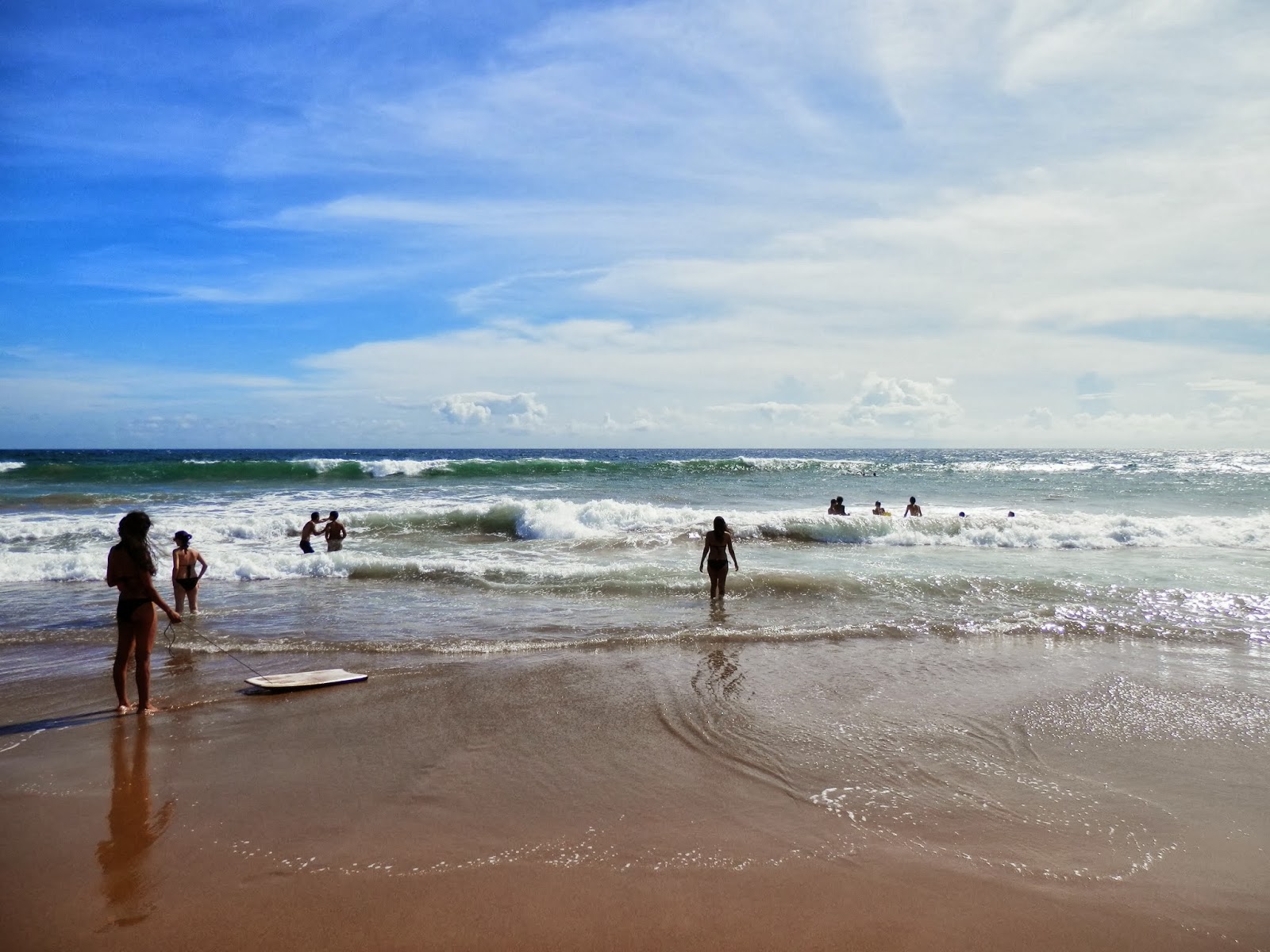
Today, Sunday was a very relaxing day as I had no work yet for my classes and I had all of the freedom in the world. I woke up and it was a beautiful and sunny day, as had been almost every other day we've been here, if it was not raining. I thought that it would be a great day to go to the beach since it was our first free weekend in Dakar and none of us had been to the beach yet. So I texted my neighbors Brittany and Jack, as well as a few other people in the program to see if they wanted to go to the beach too. Coincidentally, Brittany’s told me that her host brother, Yousou wanted to do the same. I first had a hearty brunch of egg, fries and onions with bread, prepared by my host sister Diro. It's a meal I've had a few times since being here and every time its been delicious.


I then met Brittany and her host brother Yousou outside of our houses and we departed for the beach. I didn’t know what beach we were going to and I had heard a few names of some good ones in Dakar (there are many being that Dakar is a peninsula), but I didn't ask Yousou which one we were going to because I was confident that whatever beach we went to would be a good one. As we started walking I thought maybe that we were going to the beach which is in walking distance from where we live, however Yousou then hailed a cab and I realized we were going somewhere else. As we drove in the cab I realized we were going to the northern area of Dakar called Les Almadies and we were entering the same area that we had just been the night before night. It was about a 10 minute ride all the way to where we got out and walked a few yards to the beach. As we approached the beach I was stunned by how beautiful it was. 


We went down to where there were a number of umbrellas set up with mats under each of them. A man approached us and explained that we had to pay 1000CFA ($2) for one of the umbrellas, a fee that goes to the people who were responsible for setting up the umbrellas and the upkeep of the beach. I wondered how they were designated with that responsibility, although I didn't question it any further because the beach was very clean. Since we got there during the early afternoon around 2pm there were not that many people present as many natives in Dakar work on the weekends. There were a good number Europeans though as Yousou explained that this was still vacation season for Europeans and many of them like to come to Senegal for their vacations because of the nice beaches and cheap prices. Brittany then rain into the water, however I had to take a few pictures before I go in because the beach and the area that it was in was so picturesque.


I then undressed and ran to the water too. Yousou stayed back relaxing under the umbrella and on his phone, although he came down to the sand eventually. As I approached the water the sand felt amazing on my feet as it much finer that the sand on Goree island, of which you could clearly see and feel the makeup (pieces of glass, rocks, trash, etc.). I spent a good amount of time just laying out on the beach and sinking into the sand. The water was extremely refreshing and feeling the waves splash against me was nice too. While we were in the water Brittany said that she thought this was the happiest she had ever been, which I was glad to hear. Although I didn't know if I felt the same, I knew I made the right decision to study abroad in this city. Over the next 3 hours we spent time getting in and out of the water and taking naps under the umbrella, an amazing afternoon. 

Yousou and I
Brittany!

There were also a lot of people who started to come to the beach and around 5pm/5:30pm it was full of Senegalese people who had just got off work as well as Europeans on vacation. We then packed our things and departed around 6pm, the perfect time because right after getting in the taxi on the way home it started to rain.

Saturday, September 7, 2013

Senegalese Baptism

Today I got the unique opportunity to see a Traditional Senegalese Baptism, or at least the celebration part of the baptism. After I felt good enough to get out my bed I took a shower and went just outside onto the unpaved road in front of the house. There was a tent set up that I remembered hearing being set up the night before when I was experiencing the deathly sickness, which covered the front of our house and the house across the street. 

I sat outside with the two students from the MSID program, Jack and Brittany, who lived in the houses directly across the street from me as well as a few students from the Global Citizen program for high school students taking a gap year, as one of the them was staying in the same house as Jack.  We sat and talked about our programs and experiences so far and we were making plans for what we wanted to do after lunch, which many people had at 2pm because it is in sync with the prayer times since 95% of Senegalese are Muslim. Brittany then mentioned that she thought her family was having a baptism today so she didn't know if she could do anything. The global citizen students had also heard about the baptism however they were unsure if they wanted to attend because they didn't think they had the proper attire. 

Then slowly people began to bring out chairs and sitting in the area of around us as I realized that a portion of the festivities would be happening right where we were sitting, however I didn't know what. We soon heard loud music coming from around the corner and then we saw there was a group of people coming down the street like a small parade, and we knew he baptism is here. 


There were some Senegalese men at the front playing instruments instruments while the the Senegalese woman at the front with the loudspeaker lead the procession, and a few other younger kids were holding baskets of fruits and other gifts for the family of the baby. The woman at the front was saying a lot of things in Wolof which were distinctly different phrases but they sounded in harmony like a song. They continued the music as they approached and entered the space under tent all the way until they were right in front of the entrance into the yard of the house. The woman then continued to speak, however it was like a conversation with the mother of the baby and the people present at the ceremony, as they would respond with affirmation to her after every one of her sentences or phrases. At some points other women would jump in and say something that I’m assuming was about the baby. 

Musiciens
Master of Ceremonies
After the woman finished and the music died down they went back down the street from where they came from. They then returned 15min later and performed another stage of the ceremony with music and a speech from the woman after which everyone who was present at the baptism ate. The mother of the baby even offered me food and water just because I was present, which seemed in accordance with the value system of the Senegalese because they are all about community and sharing. So I went into the front yard of the house to eat with the other young men who I assumed were related to the family and it needless to say that the food was delicious. After eating many family members just sat outside of the house and talked as I didn't know if anything was coming after the two processions or that night. However, once it started raining very hard and the road began flooding, I returned back into my house. The funny thing at the end of all of this is that despite all of these festivities for the baby, I never actually saw the baby who all of the celebration was for.

At the baptism I really enjoyed seeing all of the vibrant colors that the women were wearing. This was the first time that I had seen so many women wearing their traditional garbs. I wish I would have taken more pictures of the women in their dresses, however I felt bad asking for a picture of them just because I felt like a tourist doing so. Although now in retrospect I definitely should have as I haven't seen such colorful dresses since. Another thing I enjoyed about the baptism was that it was such a exciting and positive communal celebration all for the birth of one child.

Friday, September 6, 2013

First Sickness

Today I experience the worst feeling that I had possibility experienced in my entire life. I’m not sure exactly what the sickness was but it was what I understood to be a fever, the flu, food poisoning all at the same time. I woke up in the morning intending to attend school as classes hadn't started yet but we did have to go to the WARC for our last day of orientation. After showering and getting ready I went down for breakfast but I knew as soon as I woke up I didn't want bread and I only wanted tea to soothe my stomach. 

However as I was drinking my tea I started to get a little nauseous and ran upstairs after which I threw up everything from my very delicious traditional Senegalese meal from the night before, during which I indulged quite a bit. I then went outside told my neighbor and fellow MSID participant Jack that I would come to class later that day because I was feeling sick, little did he know that I had thrown up everything just moments before. I then proceeded to sleep for the next day, periodically getting up to throw up or relive my self.

The school actually called me in the afternoon to check to make sure I was not extremely sick with malaria or any other illness. It turned out that 4 other people in the program were sick as well and they thought that it was because of the unfiltered water that we had at lunch on Thursday. Which I remembered drinking a lot of because I thought it was filtered and I was extremely thirsty. Apparently everyone but me knew this was not the case. I knew that everyone warned against drinking the faucet water in a developing country I had never experienced the effects of it. Now I understood from personal experience. 

At some point during the afternoon and night each of my family members came into my room to see if I was okay and I explained that I had taken my medications and I would hopefully be better soon. My host sister in the late afternoon actually came in and when I told her I was hot she told me to get up and she helped me put my bed outside in the cool air because my room was so hot. Even after the stomach sickness and the the diarrhea ceased I continued to feel extremely sore all night and even until the next day. I continued to sleep until about 10:30am on Saturday (I had a slept a solid 20 hours by then) when my strength had returned and the soreness had ceased.

Thursday, September 5, 2013

WARC Tour & Reflections

Today we had another round of orientation at the WARC (West African Research Center) which included an overview of the readings we did over the summer, a tour of the WARC and discussion about our internships for the second half of the program. The facilities are pretty nice, there is a main classroom where we have the majority of our classes and a second one where we have our French class on Fridays. There is also a computer room and they have wifi throughout the facility. They also have a library which looks pretty nice and I definitely plan on renting some books from there by some well known Senegalese authors like Cheikh Anta Diop and Leopold Sengor to read.

WARC

WARC
The Main Classroom
After class all of us went to a store called MyShop to sit down have some snacks and drinks. While talking with the other MSID participants about our time in Dakar one girl explained that she didn't feel she had the right to tell the people in this country how they can develop themselves and improve their lives, being that the focus of our studies was International Development. She even felt a sense of guilt just sitting at that shop and having a snack, almost as thought she was imposing herself on the Senegalese sitting around us just by her presence. She then explained that when we were on the bus tour around the city during the second day she felt at times as though she was looking out the window at the Senegalese like they were animals. I didn't feel any sentiment of anger at this comment but I immediately thought about the society that produced the images and ideas which caused her to have this perception of Africans as animals. It could have been just the fact that we were not speaking with the people who we were looking at so she felt disconnected from them, like one does when their at the zoo looking at animals. However the people we saw on the streets weren't in cages, and they weren't there for our entertainment. Nonetheless, I thought it was an interesting comment and it definitely pointed out a difference in our perceptions because as I looked out the window during our tours I thought more about the all of the differences in the life experiences between myself and the people at whom I was looking. I really appreciated opportunities like these to sit down with the other students and get their opinions about our time here in Senegal because sometimes people are hesitant to express themselves fully in class during formal discussion.

Then on our way back to our host families my friend Brittany asked me why I came to Senegal for the MSID program. I said that I first wanted to study abroad to improve my French however I didn't want to do so in a First World country or Western Civilization/European country. Also I had never been to the continent of Africa so studying in any African French speaking country seemed like the best idea to me (although this is also a difficult situation because the fact that any African country speaks French is due to some form of colonization by a European country, France). Additionally having the opportunity to spend 3 1/2 months in Senegal with the only purpose of my trip being to study, learn, reflect and enjoy myself is definitely a once in a life opportunity. After researching the country of Senegal and the city of Dakar as well as the program, I definitely felt like it was the best decision.

She then asked me if I felt like I was more at home in Senegal which was a difficult question because I thought that in no way could a completely foreign country on a continent which I have never been to actually feel like home because it lacks the sense of familiarity that any place which I would consider home would have, so I said no. However home for me is also a place where you are very comfortable and at ease, and just the simple fact that everyone one in the country is of the same skin color as I provides me with a sense of comfort, for some reason, that I do not have in the US. Additionally I explained that home also represents a place of origin so technically Africa is home because those that came before me were removed from Africa, and I am an American as a result of that involuntary process of removal. However, I was born and raised in America, my experience is America, as well as the experiences of my mom and dad and their parents, and so I am an African-American.

Later that night that Brittany's host brother, Yousou asked me if I knew where my family was from in Africa.
"Savez-vous dans quel pays votre famille est originaire de l'Afrique?"

I responded that I didn't and I felt a little embarrassed in that moment because I wondered if I didn't know my origin country then could I relate to my friends host brother anymore than my friend from Minnesota? Likely not because we were both American, although I knew I could find out the answer with a blood test and at the time I felt the desire to do so. I felt like having more a sense of origin would also give me more piece of mind in terms of my own sense of identity. Although my perception of personal identity is solely focused on the individual which is in contrast to the communal sense of identity prevalent in Senegal, as one's identity here comes from their community, family and lineage. So in that case my identity is defined by my mother and father, my aunts, uncles cousins and grandparents.

Wednesday, September 4, 2013

La Maison des Esclaves


Today we went to Goree Island. I heard a great deal about Goree Island in my Intro to Africana Studies Course during the Spring semester and from people when I told them I was traveling to Dakar, Senegal. It is a very well known place mainly because it is home to the House of Slaves, which has become a tourist destination because for those interested in the Atlantic Slave Trade. Although many claim that Goree Island had little significance to the Atlantic. My mother was also one of the main reasons that I knew about the island before coming to Senegal because she told me about her experiences in Dakar and on Goree Island from when she was in Senegal the year I was born. 

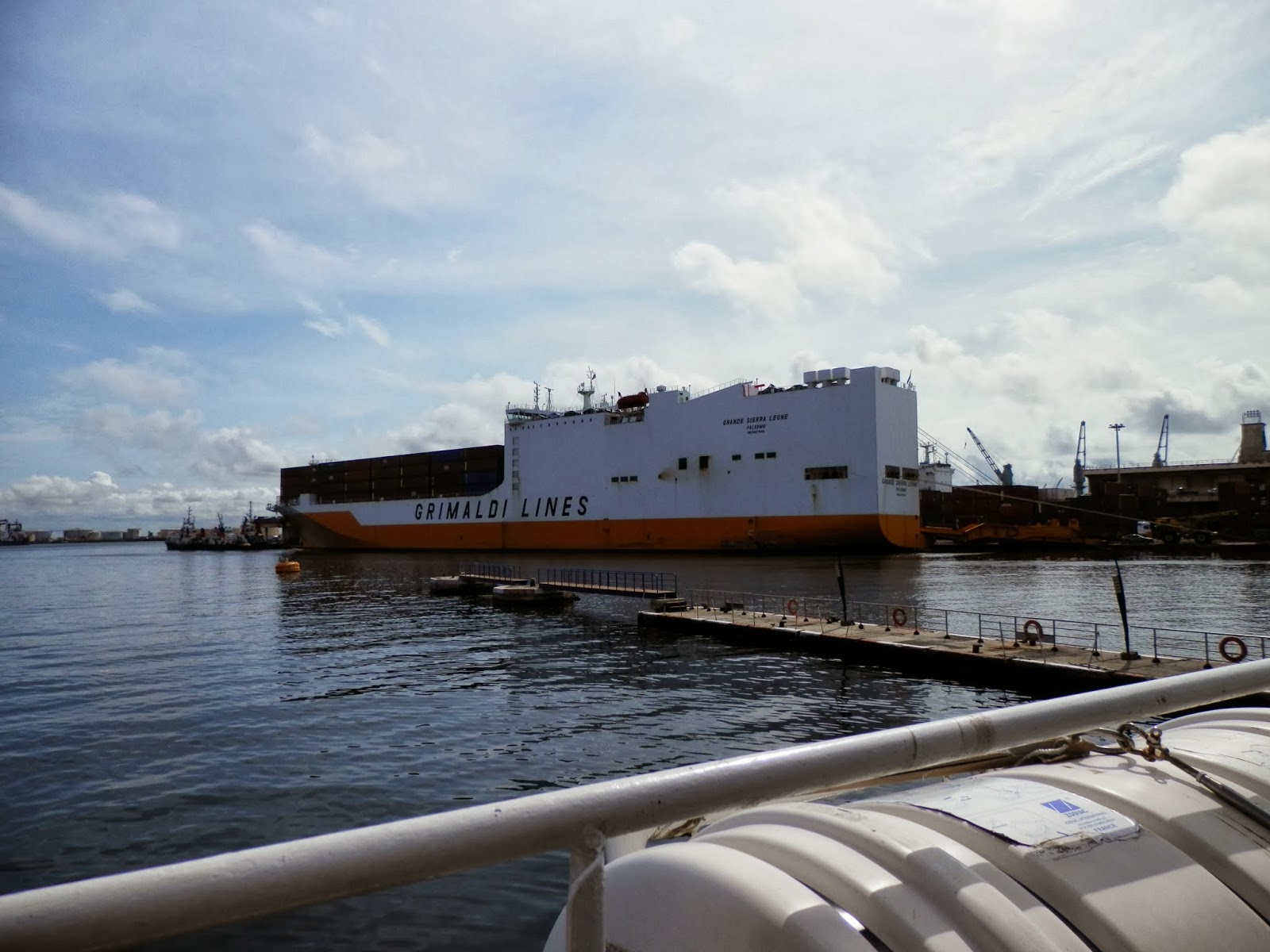
The day began with the group meeting at the Western African Research Center and from there we entered taxis to the port in downtown from where the ships to Goree Island depart. I bought some glasses outside from a guy while we were waiting for Marie and Waly to purchase our tickets, which was my first experience with Bargaining. The guy asked for 3000CFA but I asked for 1500 and settled for 2000CFA, although I feel like if I had walked away he would have called me back and given them to me for 1500CFA. Then after we boarded the boat and left for the Island. Goree Island was about a 30 minute trip and it was pretty bumpy ride over there.


Goree Island
When we arrived we exited the boat onto the pier at the Island and our tour guide was waiting for us at the end of it. Waly introduced us to the guide and we began our tour of the island. The first stop was a statue of Galaye (Blaise) M'Baye Diagne, the first African elected at the French National Assembly and to obtain a post in the French government. Blaise Diange also served as the mayor of Dakar for 14 years.

Blaise Diagne

Right behind the statue was a large Baobab tree, the national tree of Senegal.

Baobab Tree
The base of the Baobab Tree
 We then entered into the Maison des Esclaves.


In the "Maison Des Esclaves" our tour guide showed us how there were individual rooms for the different groupings of slaves, as he said the French who owned Goree Island, were well known for their strategic placement of the slaves. There were was a room for the men, the women who were virgins, the women who were not virgins and one for the children as well. 


The room for the men was the smallest and furthest away from the room for the women. There was also no bathroom in the room for the men and they were only allowed to eat and exit the room once a day so they would often have to sit in their own feces, much like the circumstances on the slave ships on which millions of slaves were transported to different parts of Europe. The room for the children was the smallest but they were also the only one who were not chained down because the guards were not fearful of the children rebelling. The room for the women who were virgins was the most open and closest to the main hallway so that the Europeans could point the ones they wanted for the guards to get from the room. Also the virgin women were the only ones with a toilet in the room itself so that the women could use the restroom before the people who were interested in purchasing them picked them out.

There we also rooms or rather small chambers that were used as a means of punishment for the slaves who were aggressive or attempted to rebel. If a slave was to be punished they were thrown into one of the these small chambers for up to 3 days. The french often packed these very small chambers with many slaves to the scare the rest of the slaves from attempting to take the same course of action. Our tour guide also showed us a room for the slaves who demonstrated the most resistance and it was known for being the room from which the slaves never exited alive. The room was directly next to the water and the slaves were left in their until they died from the moisture of the room getting into their lungs, dehydration or starvation.

The final things he showed us was the main hallway which led to the "Door of No Return". This door exited that onto a platform on which the slaves would enter the ships and depart from Africa. Our tour guide explained that all of the slaves would be chained to one another so that none of them could jump into the water during the process of boarding the ships. Additionally if a slave did try to jump or resist the guards would shoot them down to prevent the rest of the slaves chained to them from falling into the water. However, despite these measures there were many slaves who still committed suicide by jumping into the water. that were thrown into the water by the guards and masters of the house for their. Goree Island was also known for the many sharks that would surround the island because of the great number of bodies that ended up in the water.


Me in front of the Door of No Return
The "Maison Des Esclaves" was quite an experience for me because I had heard so much about the horrors of slavery and the history of the dehumanization and exploitation of Africans that defined the Atlantic Slave Trade, but I had never seen the location of these events or an actual slave quarter first hand. Walking into the actual rooms were many lives had been lost was a very surreal experience and I felt bit awkward going on a tour of it as though it was an exhibit but I understand the importance of using the "Maison Des Esclaves" as a means of shedding light on all that occurred within the Slave Houses across the African coast in reverence for the lives that were sacrificed and lost.

After exiting the "Maison Des Esclaves", our tour guide took us to the Statue of Liberation` and the Slavery Monument. He explained to us the significance of these works to the Senegalese and to all those involved and impacted by the Atlantic Slave Trade.
The Statue of Liberation


Slavery Monument

We then walked up to the top of the island for lunch at a restaurant which was unexpectedly very good. It was here that Waly did the second part of his orientation regarding safety, travel around Senegal and our trip to Toubacouda. First we had a salad which we made from a platter of vegetables shaped like a fish which was very good. Next they brought the actual lunch platters which were chicken and fish. I wish I would have taken a picture but those who ordered fish got a whole fish on a platter, with eyes and everything. Also on the side they brought out plantains, rice and fries and we were able to walk up to the table and get how much we wanted of those things. Then for the dessert they gave us a cup of mangos, pineapples and oranges which was very good also.


Mango Dessert
After the very filling lunch and when Waly finished telling us everything we went to the beach on Goree Island, which is a very small beach. The beach was a little dirty and you could see small pieces of debris in the sand (broken glass, bags, etc) but it had been such a hot day and we had been walking around the island all day that it felt good to get into the water. We stayed there for about an hour and then boarded the ferry to head back.